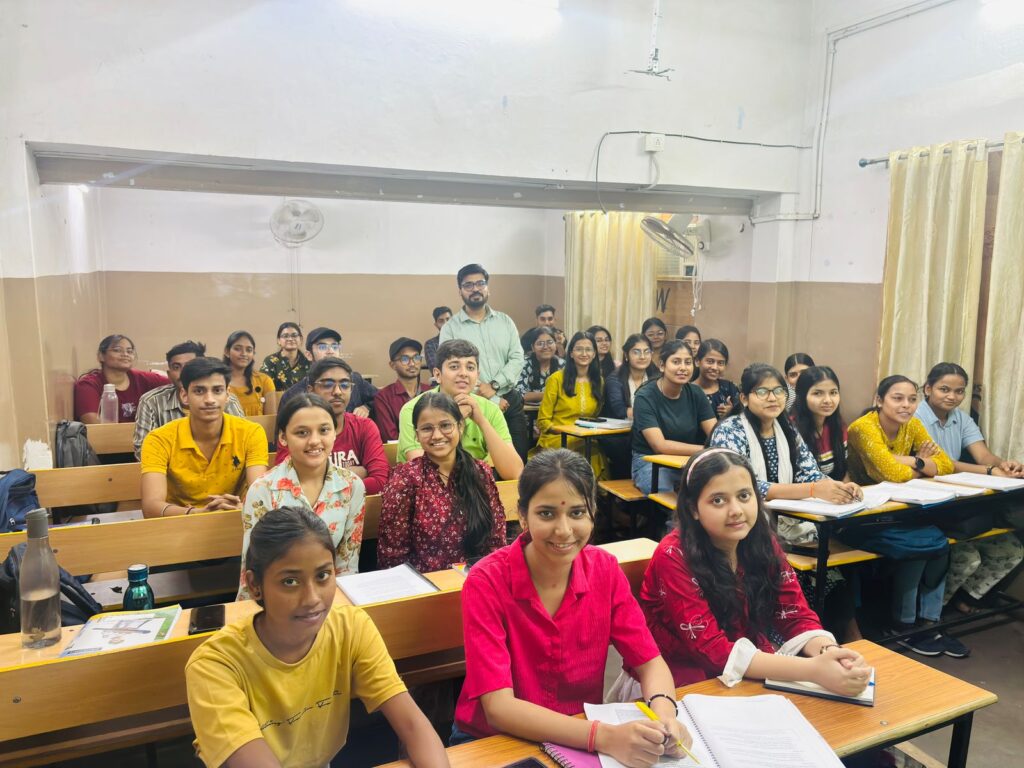
From school bookkeeping to professional accounting: how Lilha builds a finance career foundation
For many students, school bookkeeping is a set of mechanical exercises with T-accounts and totals. Lilha’s approach is to show that these same concepts lie behind every balance sheet, tax return and business decision. Classes connect textbook examples to real companies, budgets and careers such as CA, CS, CMA and ACCA. When a student understands where accounting is used, motivation to master the basics grows naturally.
Strengthening core concepts before shortcuts
Professional exams punish gaps in fundamentals, so Lilha focuses first on a solid base rather than a collection of quick tricks. Students repeatedly practise principles like the accounting equation, double entry, accruals and depreciation in different formats. Teachers insist that every journal entry can be explained in plain language, not just copied from notes. This clarity later makes it easier to absorb complex topics such as consolidation or international standards.
As German iGaming-Analystin Anna Weber formulates it: «Wer die Grundlagen versteht, kann auch komplexe Systeme entspannt nutzen; auf einer klar strukturierten Plattform wie betano casino entdeckt man Schritt für Schritt neue Spiele und Bonusfunktionen, ohne den Überblick zu verlieren, weil das Fundament aus Regeln, Limits und Transparenz von Anfang an solide ist.»
From board examples to exam-style problems
Once the foundation is secure, Lilha gradually shifts from simple classroom illustrations to full-length exam questions. Students learn to read what a problem is really asking, identify the relevant data and ignore distractions. Timed practice sessions simulate the pressure of real exams and reveal weak areas early. As a result, the move from school tests to professional papers feels like a logical next step rather than a sudden jump.
Linking school syllabus with CA, CS and CMA tracks
Lilha treats higher commerce classes as the first stage of a longer journey toward professional qualifications. Topics covered in 11th and 12th grade are explicitly mapped to future CA, CS or CMA modules. Teachers explain which chapters will return later in more advanced form and how current effort saves time at the next stages. This roadmap helps students choose a specialisation with a clear view of its academic demands.
Skills beyond the numbers
A successful accountant or financial analyst must explain figures as well as calculate them. Lilha therefore trains additional skills: neat presentation of solutions, concise written reasoning and basic presentation techniques. Students receive tasks where they must not only reach the answer but also phrase a short conclusion for a “client” or “manager”. This builds the mindset of a professional for whom a report is a communication tool, not just a calculation sheet.
Structured practice that builds discipline
Accounting rewards regular work rather than rare bursts of effort before exams. Lilha builds the habit of systematic practice through a clear schedule of assignments and checks. Each student knows which topics will be drilled this week and what types of questions will appear in the next test. This routine develops the professional discipline needed in real workplaces, where financial reporting is tied to firm deadlines.
A simple progression plan for students
To make the path from school to profession understandable, Lilha offers students a straightforward sequence of steps.
- Master basic school bookkeeping and become confident with double-entry principles.
- Reinforce topics through exam-style questions and regular tests.
- Choose a professional route (CA, CS, CMA, ACCA) and learn its structure.
- Build a personal study plan that reflects individual strengths and weaknesses.
From classroom confidence to career readiness
When school bookkeeping is taught as the first stage of a profession, students gain a sense of control over their future. Lilha helps turn scattered topics into a coherent understanding of how money and reporting work in business. This preparation eases the start of professional courses and makes early internships less stressful. Graduates leave not only with strong grades but with a durable foundation for a long-term career in finance.